


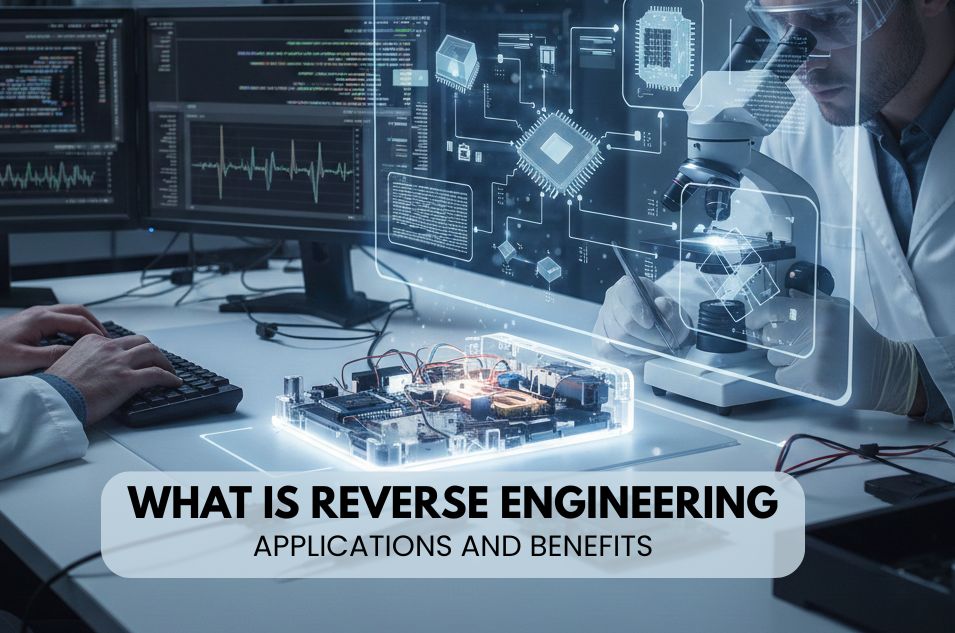
What is reverse engineering?
What is reverse engineering? Applications and benefits
Reverse engineering is the technical process of dismantling and analyzing an existing product, system, or software to understand how it is designed, how it works, and how it was manufactured, even when original blueprints, specifications, or documentation are unavailable, for the purpose of replication, improvement, documentation, or security analysis.
Thus, this approach is widely used in various industries, from information technology to manufacturing and automotive.
In this post, we will take an in-depth look at what reverse engineering is, its applications, benefits, challenges, and its impact on the modern world.
Introduction to reverse engineering
Reverse engineering is the process of taking a finished product, whether it’s software, hardware, or a mechanical component, and breaking it down to understand how it works.
Estamos hablando de un proceso que no solo ayuda a descubrir los secretos detrás de un producto exitoso, sino que también nos permite la innovación al inspirar nuevos diseños o mejoras.
History of reverse engineering
The practice of reverse engineering has existed for centuries. From ancient builders studying the structures of their rivals to the modern age of technology, the need to understand and improve existing developments has been a constant driver of progress.
Es con el avance de la tecnología, especialmente en el ámbito digital, que la ingeniería inversa se ha vuelto más sofisticada y detallada.
Applications of reverse engineering
1. Software Development
In the field of software, reverse engineering is used to understand the source code of a program, which is particularly useful when the original code is not available or when there is a need to modify or improve existing software.
2. Computer security
Reverse engineering plays a crucial role in cybersecurity. According to experts, it’s used to analyze malware, identify vulnerabilities, and develop security patches. By understanding how threats operate, defenders can create more effective strategies to protect systems.
3. Automotive industry
In the automotive industry, reverse engineering is used to analyze and improve mechanical and electronic components, allowing manufacturers to optimize vehicle performance, improve fuel efficiency, and reduce costs.
4. Consumer Electronics
Manufacturers of electronic devices, such as smartphones and household appliances, often use reverse engineering to evaluate competing products and develop more efficient and even cheaper alternatives.
Benefits of reverse engineering
Innovation and improvement
Reverse engineering is a powerful tool for innovation, as it allows engineers and developers to learn from existing designs and find ways to improve them. In this way, it not only fosters competition in the market but also drives technological advancements.
Information recovery
In cases where the original design has been lost or damaged, reverse engineering can help recover vital information for the recreation or repair of a product.
Legal and regulatory compliance
Reverse engineering can be essential to ensure that products comply with industry regulations and standards, especially in highly regulated industries such as pharmaceuticals and aerospace.
If you want to benefit from reverse engineering for your business or projects, we recommend consulting with a company like 2freedom, which offers professional 3D digitization solutions, allowing you to develop your projects on time and with complete profitability.
Challenges of reverse engineering
Technical complexity
Reverse engineering can be a complex and technically challenging process, as it requires a deep understanding of the system or product in question, as well as great attention to detail.
Legal and ethical issues
Although reverse engineering is legal in many jurisdictions, it can raise ethical and legal issues, especially if used to copy products without authorization or violate patents.
Protección de la propiedad intelectual
Product owners often implement protective measures to hinder reverse engineering, such as code obfuscation and data encryption. Therefore, these mechanisms can complicate the process and increase the time and resources required.
Impact of reverse engineering on society
Reverse engineering has significantly contributed to technological advancement and innovation, such as the creation of more efficient, safe, and accessible products, which has fostered healthy competition in the market, benefiting consumers with better options and prices.
Therefore, reverse engineering is an essential discipline that drives innovation and development across multiple industries. Despite technical and legal challenges, its ability to unlock the secrets of existing products and foster the creation of new solutions makes it a vital component of technological progress.
As technology continues to evolve, reverse engineering will continue to play a crucial role in shaping the future.
